They Started After 60 and Made It to the Podium — Here Are Their 7 Best Training Secrets
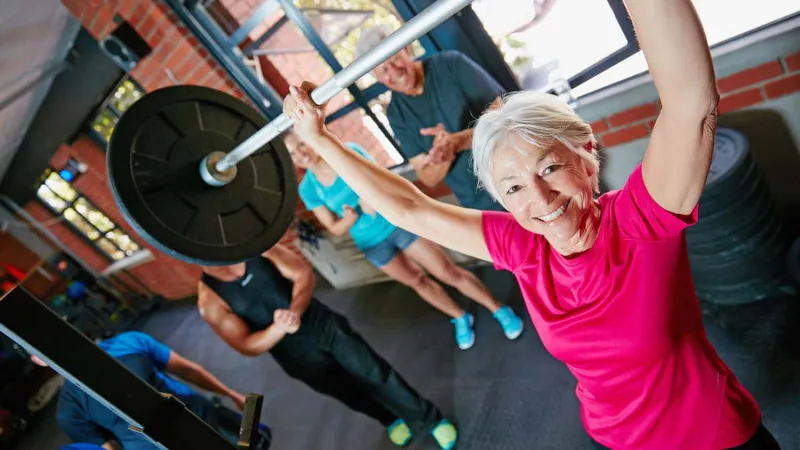
Photo: older adult athlete training gym weights senior fitness competition, via cdn.sixtyandme.com
There's a stubborn myth floating around out there that says athletic achievement has an expiration date. That somewhere around your late 30s, the window starts closing. That competing seriously — really competing, not just showing up — is a young person's game.
The athletes in this story didn't get that memo. Or they got it and threw it straight in the trash.
These are real people who laced up, strapped in, and started chasing competitive glory after their 60th birthday. Some of them had zero athletic background. Some were recovering from health scares. All of them eventually found themselves standing on a podium, medal around their neck, wondering why they waited so long.
Here's what they learned along the way — and how you can use it.
1. Start Embarrassingly Small (Then Build Like You Mean It)
Jim Castillo, 68, of San Antonio, Texas, took up masters track and field at 62 with a specific goal: compete in the shot put at a national senior games event. His first training session, he threw the shot about 15 feet. "I was genuinely humiliated," he laughs. "But I wrote down 15 feet in a notebook and told myself that number was going up."
Three years later, Jim qualified for the National Senior Games and placed in the top ten in his age group.
The lesson he preaches to anyone who'll listen: resist the urge to go hard out of the gate. Mature bodies respond differently to sudden load increases than younger ones do, and the fastest path to a long-term setback is trying to train like you're 35 when you're 63. Start at a level that feels almost too easy. Build volume and intensity gradually — coaches often recommend no more than a 10% weekly increase in training load. The progress will come. The injury from going too hard too fast will also come, and it'll cost you far more time.
2. Recovery Isn't Optional — It's the Actual Training
This one gets said a lot, but late-starting competitive athletes seem to really internalize it in a way younger competitors often don't. Margaret Hollins, 71, who started competitive swimming at 64 and now holds three regional masters records in her age group, describes her relationship with recovery as "the most important thing I've figured out."
"When I was younger and working, I could push through tired," she says. "My body now sends clearer signals, and I've learned to respect them. A rest day isn't failure. It's when the adaptation happens."
For older athletes, recovery timelines are genuinely longer. Muscle protein synthesis after a hard workout takes more time. Sleep quality matters enormously — research consistently shows that poor sleep accelerates age-related muscle loss and impairs the hormonal environment needed for athletic adaptation. Most coaches working with senior competitors recommend building at least two full rest days per week into any training program and treating them as non-negotiable.
3. Find a Coach Who Has Worked With Older Athletes
Not every coach is equipped to work with a 65-year-old body, and working with the wrong one can set you back significantly. Patricia Nguyen, 66, of Portland, Oregon, started competitive pickleball at 61 and quickly realized that the generic training advice she found online wasn't translating well to her situation.
"I was getting injured constantly in my first year," she says. "I finally found a coach who specifically worked with masters athletes, and everything changed. She knew which drills to modify, when to push, and when to pull back."
Look for coaches with experience in masters athletics, certifications in senior fitness, or personal backgrounds working with older competitors. USA Track and Field, USTA, USA Swimming, and other national governing bodies often maintain directories of coaches with relevant credentials. The investment in the right guidance pays dividends that no YouTube tutorial can match.
4. Strength Training Is Non-Negotiable — Especially Now
If you're doing cardio only, you're leaving serious athletic performance on the table. After 60, the body loses muscle mass at an accelerating rate through a process called sarcopenia — and the single most effective intervention is resistance training.
Dave Kowalski, 73, of Cleveland, who started competing in masters cycling at 64, credits a twice-weekly strength program with keeping him competitive against riders a decade younger than him. "I didn't want to lift weights. I wanted to ride bikes," he admits. "But my coach convinced me, and within six months my power numbers went up significantly. The weight room is where I get faster on the bike."
For older athletes, compound movements — squats, deadlifts, rows, presses — performed with proper form and appropriate load are the foundation. Balance and stability work matters enormously, both for athletic performance and injury prevention. If you're new to strength training, starting with a qualified trainer for even a few sessions to establish safe movement patterns is worth every penny.
5. Eat Like an Athlete, Not Like a Retiree
Nutrition is an area where many older athletes unknowingly undermine their training. The cultural script around eating less as you age can work against athletic performance in significant ways.
Protein intake is the big one. Research on masters athletes consistently shows that older competitors need more protein per pound of body weight than younger athletes, not less — somewhere in the range of 0.7 to 1 gram per pound of body weight daily — because the body becomes less efficient at using dietary protein to build and maintain muscle.
Ruth Edelstein, 70, who took up masters weightlifting at 63 and competed in her first national meet at 66, worked with a sports dietitian to overhaul her eating habits. "I was eating like I was trying to lose weight, not like I was an athlete in training," she says. "Once I actually fueled my body properly, my recovery improved, my energy improved, and my lifts went up."
Timing matters too. Getting protein in within 30-60 minutes after a training session gives aging muscles the building blocks they need when they're most receptive.
6. Build a Mental Game That's Tougher Than Your Body
Competitive athletics at any age is partly a psychological endeavor. At 60+, there's an extra layer: the internal voice that whispers you're too old, that you look ridiculous, that the younger athletes in open divisions are judging you. Silencing that voice — or at least turning down its volume — is a skill that separates the athletes who make it to the podium from those who quit before they get there.
Frank Delgado, 65, of Miami, who started competing in masters triathlon at 61, worked with a sports psychologist for six months before his first major race. "I had all this external stuff figured out — training, nutrition, gear," he says. "But in my head, I was still telling myself I didn't belong there. The mental work was just as important as the physical."
Visualization, process-focused goal setting, and learning to reframe setbacks as data rather than failure are tools that work regardless of age. Many senior athletes also find that the life experience they bring to competition — the ability to stay calm under pressure, to maintain perspective, to not catastrophize a bad performance — is a genuine competitive advantage over younger, less seasoned competitors.
7. Pick the Right Sport for Your Body — Then Go All In
Not every sport is equally suited to every body, and part of the art of late-starting athletic competition is finding the right match. High-impact sports like running can be wonderful but may not work well for athletes managing knee or hip issues. Swimming is extraordinarily joint-friendly but requires access to a pool. Pickleball, tennis, cycling, masters weightlifting, track and field, rowing — the options for senior competitive athletics in the United States are genuinely broad.
The athletes who thrive are the ones who do an honest assessment of their physical starting point, consult with their physician, and then choose a sport they can fall genuinely in love with — because the training demands of competitive athletics require real motivation to sustain.
"Find something you'd do even if there were no medals," says Margaret Hollins. "The medals are great. But the love of the sport is what gets you to practice on a cold morning when everything in you wants to stay in bed."
The podium is more accessible than most people think. The athletes who've already climbed it will tell you: the hardest part wasn't the training. It was deciding to start.
So decide.
Senior Cup MTY connects late-blooming competitors with tournaments, communities, and resources built specifically for athletes 55 and up. Your athletic chapter isn't closing — it might just be getting started.