Why 58 Might Actually Be Your Athletic Prime (No, Really)
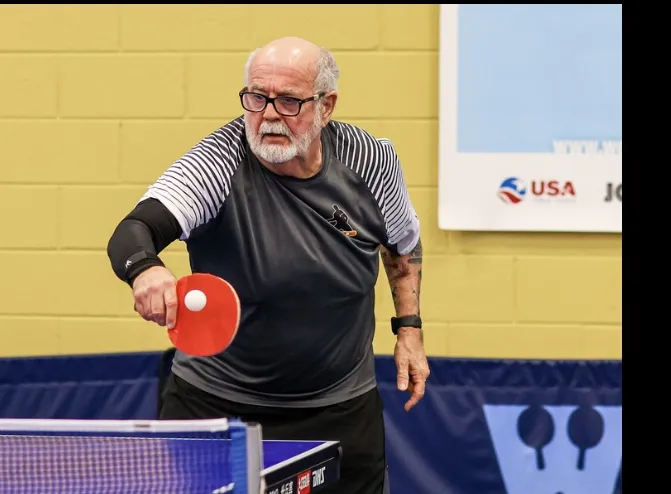
Photo: Mel496, CC0, via Wikimedia Commons
Let's get something out of the way first: yes, a 58-year-old will lose a footrace to a healthy 25-year-old. Muscle mass, VO2 max, and fast-twitch fiber recruitment all decline with age. Nobody's arguing otherwise.
But here's what's getting lost in that conversation — athletic competition is not a footrace. It's a complex, layered contest of skill, strategy, endurance, pattern recognition, emotional regulation, and decision-making under pressure. And in most of those categories, the experienced competitor doesn't just hold their own against a younger opponent. They have a structural advantage.
Senior athletes competing today aren't making the best of a bad situation. In a very real sense, many of them are performing at the highest level of their competitive lives — just in a different dimension than they did at 25.
The Myth of Peak Performance
We've been conditioned to think of athletic peak as a narrow window — somewhere in the mid-to-late twenties — after which everything is decline management. That model made sense when sports science was mostly focused on elite professional athletes in explosive, power-dependent sports. It doesn't hold up nearly as well when you look at the broader landscape of competitive athletics.
In tennis, for example, the game rewards consistency, placement, and mental composure as much as it rewards speed and power. A player who can read the court, anticipate patterns, and control their nerves through a tight third set has a real edge over someone relying on pace alone. Those are skills that compound with experience — they don't peak at 27.
Diane, a 61-year-old competitive tennis player from Portland, Oregon, put it simply: "I was a decent player in my 30s. I'm a good player now. The difference is I actually understand the game."
She's not unusual. At Senior Cup MTY events, we regularly see competitors who describe their current game as sharper, more refined, and more mentally disciplined than anything they produced in their youth.
Decades of Failure as a Superpower
One of the most underrated advantages senior athletes carry onto the court is their relationship with losing.
A 22-year-old competitor who loses a close match may spiral — emotionally, mentally, sometimes for days. They haven't yet built the internal architecture to process setbacks cleanly and move forward. That's not a character flaw; it's just inexperience with failure.
An athlete in their 50s or 60s has typically accumulated a lifetime of setbacks — in sports, in career, in relationships — and learned how to metabolize them. They know that a bad game is a bad game, not a referendum on their worth or ability. That psychological resilience has a direct, measurable effect on performance.
Sports psychologists refer to this as "equanimity under pressure," and it's one of the hardest mental skills to teach. Senior athletes often arrive with it already developed — not from sports training, but from living.
Marco, a 64-year-old competitor from Miami who took up competitive tennis at age 52 after retiring from a career in construction management, describes it this way: "I've had projects fall apart. I've had teams fail. I know how to stay calm when things go sideways. That's exactly what you need when you're down a set and it's 90 degrees out."
Body Awareness: The Skill You Can't Rush
Young athletes are often operating their bodies on instinct and raw capacity. They don't need to think much about how they move — they just move. That works until it doesn't, usually in the form of injuries that pile up because they never learned to listen to the signals their body sends.
Senior athletes, particularly those who've stayed active through their 40s and 50s, develop a finely calibrated sense of what their body is doing and what it needs. They know when to push and when to back off. They recognize the difference between productive discomfort and the early warning signs of an injury. They adjust their game on the fly based on how they're feeling that day — a sophisticated form of real-time performance management that most young competitors simply don't possess.
This body awareness also shows up in technique. Without the option of overpowering opponents, senior athletes are forced to become more technically precise. Groundstrokes get cleaner. Footwork becomes more economical. Shot selection sharpens. The game gets smarter.
The Personal Record Phenomenon
Here's something that might surprise you: personal records set later in life are more common than most people realize.
In masters athletics, it's not unusual to find competitors who ran their fastest 5K at 55, hit their most consistent tennis season at 62, or achieved their best competitive ranking at 68. Some of this is explained by the fact that they didn't take up the sport seriously until later in life. But a significant portion involves athletes who competed in their youth, stepped away, and returned to find themselves performing at levels they never hit when they were young.
Barbara, a 59-year-old from Chicago who played recreational tennis in her 20s, returned to the sport at 51 after her kids left for college. By 56, she was competing in regional senior tournaments and winning her age bracket. "I never won anything when I was younger," she says with a laugh. "I didn't have the patience. Now I do."
Patience, it turns out, is one of the most powerful performance variables in competitive sports — and it's almost exclusively a product of age.
Strategic Thinking as Athletic Skill
Watch a senior competitor in a tight match and you'll often see something that looks almost like chess. They're not just reacting — they're constructing points, setting up patterns three or four shots in advance, exploiting tendencies they've identified in the first set.
This kind of strategic thinking is a legitimate athletic skill. It requires processing speed, working memory, and the ability to hold a plan in mind while executing under physical stress. Research in cognitive sports science suggests that experienced athletes develop more efficient neural pathways for pattern recognition — they see the game differently because they've seen more of it.
A 25-year-old athlete has raw processing speed on their side. A 60-year-old has a richer, more complex database of competitive experience to draw from. In many game situations, the database wins.
A Different Kind of Peak
The senior athletes competing at Senior Cup MTY events aren't chasing their youth. They're not trying to be 25 again. They're doing something more interesting — they're competing at the edge of what's possible given everything they've accumulated over a lifetime.
That's not a consolation prize. It's a different kind of peak performance, one that demands respect on its own terms.
If you're over 50 and still competing — or thinking about getting back into it — here's what the evidence suggests: your best athletic chapter might not be behind you. It might be the one you're in right now.