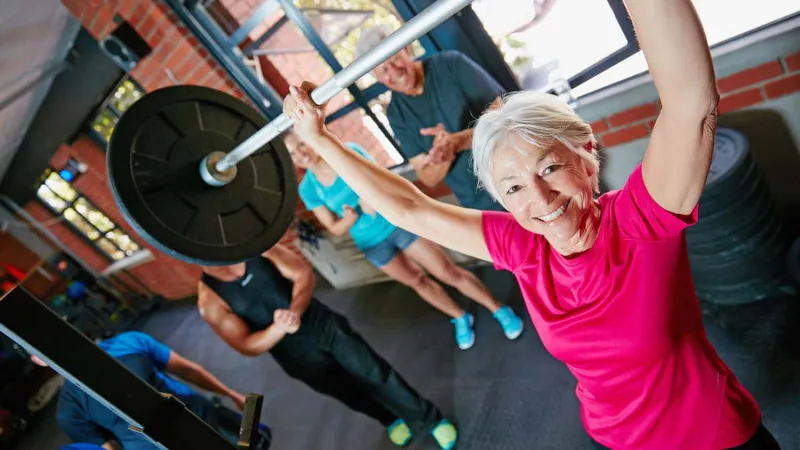
Your Brain on Competition: How Staying in the Game Keeps Senior Athletes Sharper Longer
There's a moment every competitor knows. You're down a set, your opponent is serving well, and your brain is running through a hundred calculations at once — reading body language, adjusting strategy, managing nerves. For most people, that kind of mental intensity peaks in their twenties and slowly fades into memory. But for senior athletes still lacing up and showing up to tournaments, that moment happens every single weekend. And according to a growing body of research, it might be one of the best things they can do for their long-term brain health.
We already know that physical activity is good for the aging brain. That's not news. But what scientists are starting to unpack is something more specific and, frankly, more exciting: competitive sport — the kind with opponents, stakes, and strategy — appears to offer cognitive protection that goes well beyond what recreational exercise delivers on its own.
More Than Just Moving: What Makes Competition Different
Dr. Patricia Reeves, a gerontologist at a major research university in the Midwest, has spent the last decade studying how different types of physical activity affect cognitive aging. Her work keeps pointing in the same direction.
"When we look at older adults who participate in organized, competitive sports — as opposed to people who walk, swim laps, or do fitness classes — we consistently see better performance on tests of executive function, working memory, and processing speed," she explains. "The brain isn't just getting a cardio boost. It's being asked to solve problems in real time, under pressure, against an unpredictable opponent. That's a fundamentally different stimulus."
The neuroscience behind this makes intuitive sense once you break it down. Competitive sports demand what researchers call dual-task processing — your body is doing one thing while your brain is doing several others simultaneously. In tennis, for instance, you're tracking a ball moving at 60-plus miles per hour while simultaneously reading your opponent's positioning, deciding where to place your shot, and managing your emotional state after the last point. That's a serious cognitive workout.
This kind of multi-layered mental demand activates the prefrontal cortex, the hippocampus, and the anterior cingulate cortex — areas of the brain that are among the first to show decline in conditions like Alzheimer's and other forms of dementia. The theory, supported by emerging evidence, is that regularly stressing these neural networks through competitive engagement helps maintain their structural integrity over time.
The Numbers Are Hard to Ignore
A 2022 study published in a peer-reviewed journal of sports medicine followed more than 800 adults between the ages of 60 and 80 over a five-year period. Participants were divided into three groups: sedentary individuals, recreational exercisers, and competitive athletes involved in organized tournaments. After adjusting for variables like education level, diet, and baseline health, the competitive athletes showed a 34% lower rate of measurable cognitive decline compared to the sedentary group — and a statistically significant advantage over recreational exercisers as well.
That gap matters. It suggests that the nature of the physical activity — not just the fact that it's happening — plays a meaningful role in brain health outcomes.
Another piece of the puzzle is the social dimension. Competitive sports don't happen in a vacuum. They come with teammates, rivals, coaches, and communities. Social engagement is itself a well-documented protective factor against cognitive decline, and for senior athletes, competition bundles physical, cognitive, and social stimulation into a single activity. It's almost unfairly efficient.
"I Feel Sharper Than I Did at 50"
Ask the athletes themselves, and you'll hear this sentiment over and over again.
Roger Tanaka, 71, has been competing in senior tennis tournaments across the Southwest for the past eight years. He played recreationally through his forties and fifties but only joined a competitive league after retirement. The difference, he says, was immediate.
"When I was just hitting around with friends, I'd show up, have a nice time, go home. My brain wasn't really in it," he says. "Once I started competing — once there was something on the line — everything sharpened up. I started studying the game differently. I started thinking on the court in a way I never had before."
Carol Whitfield, 67, a pickleball competitor from suburban Atlanta, echoes that sentiment. "People think I play because it keeps me fit. And sure, that's part of it. But honestly? I play because it keeps me me. I'm making decisions under pressure every time I step on the court. I think that's why I feel as mentally sharp as I do."
The Strategy Factor: Competition as Cognitive Training
One aspect of competitive sport that researchers find particularly compelling is the strategic load it places on participants. Unlike running on a treadmill or doing laps in a pool, competing against another human being requires constant adaptation. Your opponent changes. The score changes. The pressure changes. And your brain has to keep up.
This unpredictability is key. The brain is remarkably good at habituating to repetitive stimuli — which is why doing the same workout routine for years eventually stops feeling challenging. Competition, by its very nature, never lets you fully habituate. Every match is different. Every opponent presents new puzzles. That novelty keeps the brain working in ways that routine exercise cannot.
Some researchers even draw parallels between competitive sport and cognitive training programs — the kind of "brain games" that have been heavily marketed to aging adults. The difference is that competitive sport delivers the cognitive stimulus inside a physically demanding, emotionally engaging, socially rich context. In other words, it does more, all at once.
What This Means for You
If you're already competing — congratulations. You may be doing more for your brain than you realize. If you've been on the fence about stepping up from casual recreation to organized competition, this research offers a compelling reason to make the leap.
The message from both the science and the athletes living it is consistent: competing isn't just about the trophy. It's about keeping your mind in the game, year after year, decade after decade. At Senior Cup MTY, we've always believed that the drive to compete doesn't have an expiration date. Turns out, your brain agrees.
So register for that tournament. Sign up for that league. Show up and compete. Your future self — sharper, more engaged, and very much still in it — will thank you.