Broken, Rebuilt, Back on the Court: The Science Behind Senior Athletes Bouncing Back Stronger
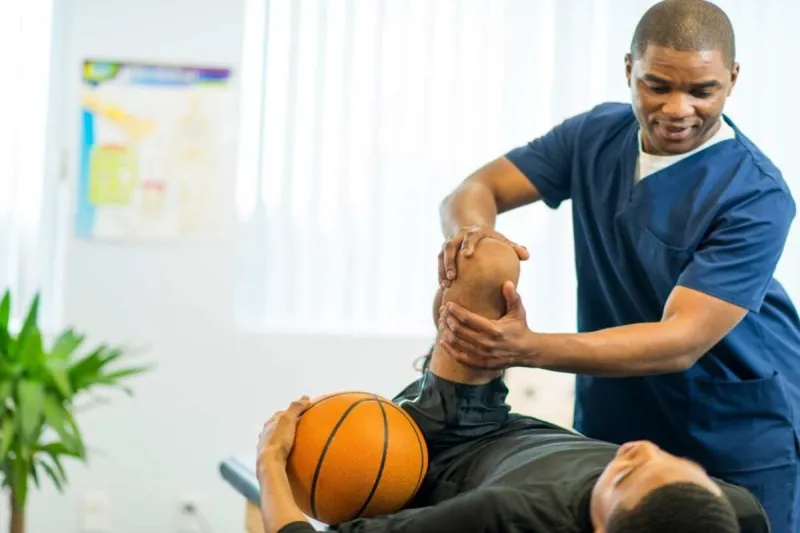
Photo: senior athlete physical therapy rehabilitation sports recovery, via images.squarespace-cdn.com
There's a moment every competitive athlete dreads. You're mid-rally, mid-race, mid-lift — and then something gives. A pop. A sharp pain. The ground comes up fast, or maybe you just freeze, knowing before the diagnosis arrives that something is seriously wrong.
For younger athletes, the mental script that follows often goes: rest, rehab, return. Fast and furious. Back on the field in six weeks if the team needs you.
For senior competitors, the story used to be told differently — and not kindly. The assumption was that older bodies heal slower, weaker, and with less chance of a meaningful return to sport. But sports medicine is catching up to what a lot of veteran athletes already suspected: that script is outdated, and the new one is a whole lot more optimistic.
What's Actually Happening Inside an Older Athlete's Body After Injury
Let's get into the biology for a second, because it matters. Yes, cellular repair does slow down with age. Collagen production drops, muscle satellite cells — the ones responsible for rebuilding damaged tissue — are less abundant, and hormonal changes affect how quickly inflammation resolves. That's real, and anyone who tells you otherwise is selling something.
But here's what that picture misses: senior athletes who've been training consistently for years tend to have significantly better baseline tissue quality than sedentary peers of the same age. Their tendons are more resilient from years of load. Their cardiovascular systems support better circulation to healing tissue. And their neuromuscular coordination — the body's ability to protect joints and stabilize movement — is often remarkably well-developed.
"What I see in my older competitive patients is a kind of physiological investment," says one sports medicine physician who works with masters-level competitors in the Southwest. "They've been making deposits into that account for decades. When injury hits, they have reserves that a 25-year-old weekend warrior simply doesn't."
In other words, the engine might run a little differently, but it's been well-maintained.
The Patience Advantage — And Why It's Bigger Than You Think
Ask any orthopedic rehab specialist what separates successful recoveries from failed ones, and the answer almost always circles back to compliance. Did the patient do the work? Did they respect the timeline? Did they resist the urge to rush back before the tissue was truly ready?
Younger athletes — especially those with professional contracts, scholarship pressure, or just youthful impatience — often struggle here. The ego wants to sprint before the hamstring is ready. The identity is wrapped up in being the one who bounced back fastest.
Senior competitors, particularly those who've been around the block a few times, tend to approach this differently. They've seen enough injuries — in themselves and others — to know that shortcuts in rehab are just delays wearing a disguise.
Marcia T., a 67-year-old competitive tennis player from Arizona who tore her rotator cuff during a regional tournament two years ago, put it plainly: "I didn't try to rush it. I'd watched younger players on my club try to rush it, and I'd watched them re-injure themselves six months later. I told my physical therapist, 'I want to be playing competitively at 70. Tell me what that timeline actually looks like.' And she did. And I followed it."
Marcia returned to tournament play fourteen months after surgery. She won her age division bracket in her first event back.
Modern Rehab Techniques That Are Changing the Game
The rehabilitation toolkit available to senior athletes today looks nothing like it did twenty years ago. Blood flow restriction training — a method that uses light loads with restricted circulation to stimulate muscle growth without stressing healing tissue — has become a go-to tool for older athletes managing post-surgical recovery. It allows meaningful strength work to happen even when the injured area can't yet handle traditional resistance.
Dry needling, targeted ultrasound therapy, and instrument-assisted soft tissue mobilization have all become more accessible through sports-focused physical therapy practices. And perhaps most significantly, the integration of strength and conditioning programming into the rehab process — rather than as something that comes after — has dramatically improved outcomes for older athletes.
"We used to think of rehab as getting someone back to baseline," says a physical therapist based in the Carolinas who specializes in masters athletes. "Now the goal is to return them to competition stronger than they were before the injury. That's not wishful thinking anymore — that's genuinely achievable with the right approach."
For senior competitors, this often means building redundancy into the system. If a knee injury reveals a hip stability weakness, rehab addresses both. If a shoulder problem uncovers a thoracic mobility deficit, that gets fixed too. Injuries, frustratingly, can also serve as audits of the whole athletic machine.
The Mental Rehab Nobody Talks About
Physical recovery is only half the equation. The psychological return to competition after serious injury is its own journey, and senior athletes navigate it with a complexity that's worth acknowledging.
Fear of re-injury is universal. But for older competitors, it can carry an extra weight — the nagging question of whether this was the injury, the one that ends the chapter for good. That fear, left unaddressed, can show up as hesitation on the court, a shortened swing, a pulled punch on a backhand that used to be automatic.
Sports psychologists who work with masters-level athletes emphasize the importance of treating mental readiness as a concrete milestone in recovery, not just a vague emotional hurdle. Visualization work, graded exposure back to competitive situations, and honest conversations with coaches and training partners all play a role.
Robert K., a 71-year-old competitive tennis player from Florida who returned to play after a tibial stress fracture, described his mental rehab this way: "My body was cleared at nine months. But my mind wasn't ready until eleven. I did the work to get there. I hit serves alone for weeks before I played a point. I needed to trust my leg again before I could compete. And when I finally did, I competed freely."
Building Your Own Comeback Blueprint
If you're currently navigating injury — or just want to be prepared if one comes — here's what the evidence and experience of senior competitors consistently points toward:
Get sport-specific care. Not all physical therapists have experience with competitive athletes. Seek out practitioners who understand what return to competition actually demands, not just return to daily function.
Define your goal from day one. Tell your medical team you want to compete again. That changes the program.
Don't skip the strength work. Mobility and flexibility matter, but muscular strength around the injured area is the single biggest predictor of sustainable return.
Treat mental readiness as a milestone. If you're cleared physically but feel hesitant, that's data. Work with it, not around it.
Build in a competitive re-entry plan. Coming back to a low-stakes event, a practice match, or a club tournament before a major competition helps recalibrate confidence and competitive instincts.
The road back from serious injury is rarely straight. But for senior athletes who bring decades of body knowledge, hard-won patience, and a clear competitive vision to their recovery, it's a road that leads somewhere real.
The court will still be there. So will you.