Sleep, Stretch, Repeat: How Smart Senior Athletes Are Winning the Recovery Game
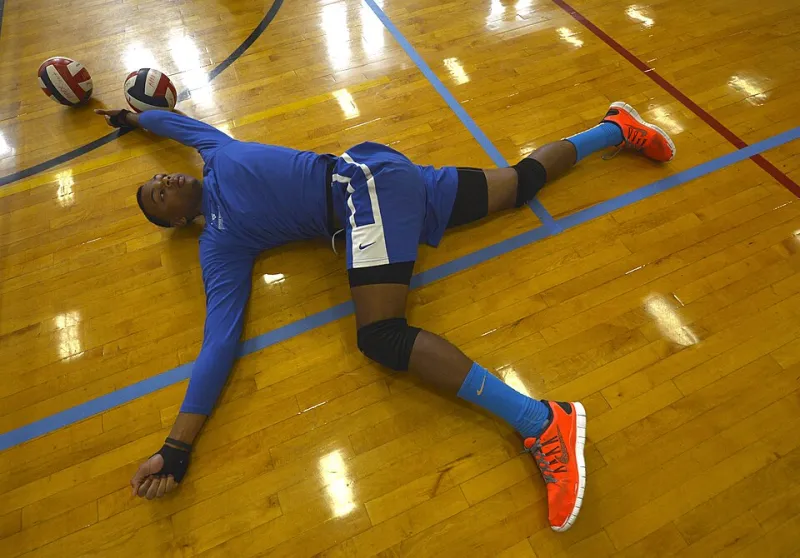
Photo: Staff Sgt. Carlin Leslie, Public domain, via Wikimedia Commons
There's a quiet revolution happening in rec centers, home gyms, and physical therapy offices across the country. It doesn't look flashy. Nobody's going viral for it. But if you want to understand why a 67-year-old tennis player in Scottsdale is still competing three days a week — and winning — you need to look past the court and into what happens after the match ends.
Senior athletes are getting serious about recovery. Not the "take it easy for a day" kind. We're talking structured, science-backed, sometimes surprisingly affordable protocols that are helping older competitors do something that used to seem impossible: get better with time.
The Old Model Is Broken
For decades, the conventional wisdom went something like this — the older you get, the longer it takes to recover, so just do less. Compete less. Train less. Expect less.
Sports scientists are now pushing back hard on that idea. Dr. Keith Barr, a researcher at UC Davis who studies connective tissue adaptation in aging athletes, has noted that the body's recovery capacity doesn't simply decline with age — it shifts. It requires different inputs, different timing, and a more intentional approach than what worked at 30.
In other words, you don't have to accept being wrecked for three days after a tournament. You just have to be smarter about what you do before, during, and after competition.
Sleep Is the Real Performance Drug
Ask any senior competitor who's made a serious improvement in their recovery and they'll almost always mention sleep first. Not supplements. Not gadgets. Sleep.
Margarete, a 63-year-old competitive tennis player based in Austin, Texas, says she didn't take sleep seriously until a coach pointed out that she was consistently losing third-set tiebreakers. "He asked me how much I was sleeping. I said, 'Oh, seven hours, maybe.' He said, 'Maybe isn't a training plan.'" She started using a basic sleep tracker and discovered she was waking up multiple times a night without realizing it.
After working with her doctor to address mild sleep apnea and adjusting her pre-sleep routine — no screens after 9 p.m., consistent wake time, a cooler bedroom — she says her on-court endurance improved noticeably within two months. "I stopped dreading long matches. That's huge."
Sleep is when the body does its most critical repair work: muscle protein synthesis, inflammation regulation, and memory consolidation (including motor memory, which is how your backhand gets dialed in). For senior athletes, getting quality sleep isn't passive rest — it's active training.
Fascia, Mobility, and the Stuff Nobody Talked About in 1995
If you've never heard the word "fascia" before, you're not alone — but you've almost certainly felt it. Fascia is the connective tissue that wraps around your muscles, organs, and joints. It's also one of the primary reasons older athletes feel stiff in the morning or tight after a match.
Foam rolling used to be the go-to answer, and it's still useful. But serious senior competitors are going further. Myofascial release therapy — where a trained practitioner manually works through adhesions and restrictions in the tissue — has become increasingly popular among older athletes who want to maintain full range of motion.
Ron, a 71-year-old former collegiate swimmer who now competes in masters tennis tournaments in the Southeast, swears by a 20-minute mobility routine he does every morning before he even has coffee. "It's not glamorous. It's just lying on the floor with a lacrosse ball under my hip. But I haven't had a hip flexor issue in two years."
Mobility work doesn't require a clinic or a specialist. A consistent routine of dynamic stretching, targeted foam rolling, and joint-specific movement drills can make a significant difference — especially when done before the body is cold and stiff from a night of rest.
Cryotherapy and Compression: Worth the Hype?
Walk into any upscale recovery center in a major US city and you'll find whole-body cryotherapy chambers — essentially walk-in freezers that drop to around negative 200°F for two to three minutes. The idea is that extreme cold reduces inflammation and accelerates tissue repair. Compression boots, which use pneumatic pressure to flush metabolic waste from the legs, are another popular tool.
Do they work? The honest answer is: probably, for some people, in some contexts.
Cryotherapy has shown modest benefits in reducing delayed onset muscle soreness (DOMS) in studies, though results vary. Compression therapy has stronger evidence behind it, particularly for circulation and lymphatic drainage — both of which become more important as we age.
The good news is you don't need to spend $60 a session to get benefits. A cold shower after a hard workout, or even a 15-minute ice bath at home, activates many of the same physiological responses. Compression sleeves and socks — available for $20-$40 at most sporting goods stores — offer a budget-friendly entry point into compression therapy.
Building Your Own Recovery Protocol
Here's the thing about recovery: the best protocol is the one you'll actually do consistently. A senior competitor who sleeps eight hours every night and does 15 minutes of mobility work every morning will outperform someone who does one cryotherapy session a week and skips everything else.
If you're looking to build something sustainable, start with three pillars:
Sleep first. Prioritize getting seven to nine hours of quality sleep. Use a tracker if it helps. Talk to your doctor if you suspect disrupted sleep patterns. This one change alone can shift your recovery dramatically.
Move to recover. Active recovery — light walking, swimming, or yoga on off days — promotes blood flow and reduces stiffness more effectively than pure rest. The goal isn't to push. It's to circulate.
Address the tissue. Whether it's a foam roller, a lacrosse ball, a massage therapist, or a physical therapist, invest some time each week in the quality of your connective tissue. Your future self will feel the difference.
The Competitive Edge Nobody Talks About
Here at Senior Cup MTY, we see it at every tournament. The athletes who are still competing at a high level at 65, 70, and beyond aren't just talented — they're disciplined about recovery in a way that younger competitors often aren't. They've learned, sometimes the hard way, that the match doesn't end when you shake hands at the net.
The real work — the work that keeps you out there next season, and the season after that — happens in the hours and days that follow. And right now, senior athletes across the country are doing that work better than ever before.
That's not just inspiring. It's a competitive advantage.