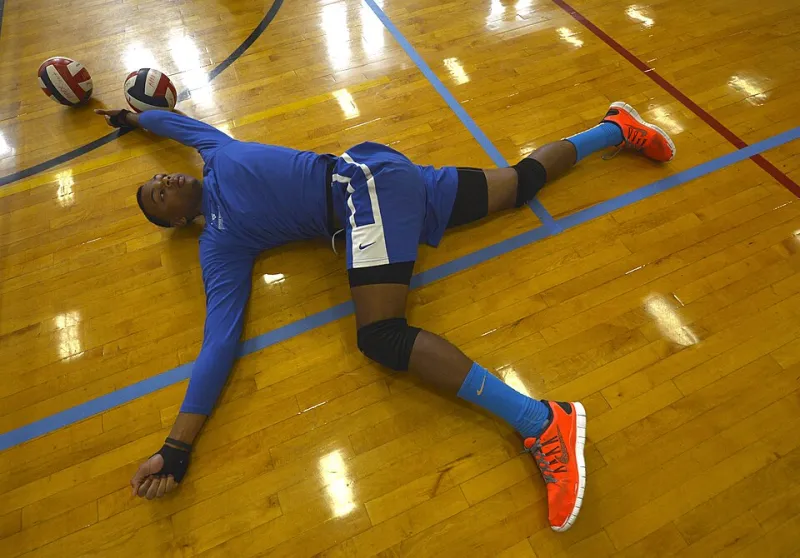
Picking Up Where They Left Off: The Senior Athletes Reclaiming Sports They Walked Away From
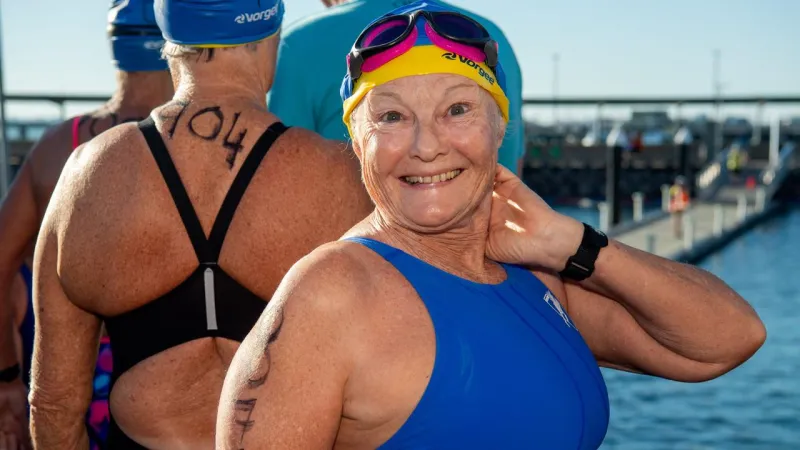
Photo: older adult athlete returning to swimming pool competition masters, via content.api.news
There's a particular kind of joy that comes from doing something you once loved and thought you'd left behind forever. Ask anyone who's bitten into a childhood favorite food after years away, or heard a song that instantly transported them back. Now imagine that feeling — but in your body, on a track, in a pool, or on a court.
That's exactly what thousands of older Americans are experiencing right now, and it's reshaping what we think senior athletics can look like.
From former high school swimmers returning to lap lanes in their 60s, to ex-collegiate runners dusting off their spikes at 67, the trend is real, it's growing, and honestly? It's one of the most compelling stories in sports right now.
Why They Walked Away in the First Place
The reasons people quit competitive sports in their 20s, 30s, and 40s are almost universal. Life gets loud. Careers demand everything. Kids arrive. Injuries sideline you at the wrong moment, and the window to get back never quite opens again.
For many, it wasn't even a conscious decision. "I didn't quit swimming," says Diane, a 64-year-old from outside Columbus, Ohio, who competed in club swimming through college. "I just... stopped. Grad school happened. Then a job. Then kids. Thirty years went by and I genuinely didn't notice until I was standing at my granddaughter's swim meet thinking — I used to do that."
That moment of recognition is something a lot of returning athletes describe. It's less a decision and more a remembering.
What's Driving the Comeback Wave
A few things have converged to make this the right moment for athletic rediscovery.
First, the fitness culture around aging has shifted dramatically. The old narrative — that your best athletic years are behind you by 30 — has been thoroughly challenged by research, by elite masters competitors, and by platforms and communities (like the one you're reading right now) that celebrate competitive sport at every age.
Second, retirement and the empty nest phase free up time that simply didn't exist before. When the schedule clears, old passions have room to breathe.
Third, social media has made it easier than ever to find your people. Masters swimming leagues, senior track clubs, over-55 tennis circuits — these communities are visible and accessible in ways they never were before. Seeing someone your age competing and thriving is a powerful invitation.
"I found a Facebook group for masters runners in my area," says Robert, 61, a former cross-country athlete from suburban Atlanta who hadn't raced since 1986. "I figured I'd just follow along. Six months later I was running a 5K. A year after that I did my first masters track meet. I cried at the finish line — and I'm not a crier."
The Psychological Dimension Nobody Talks About Enough
Returning to a sport you once loved isn't just physically interesting — it's psychologically rich in ways that starting a brand-new activity simply isn't.
There's a built-in emotional connection. You already have a relationship with the sport. You know what it feels like to train for it, to compete in it, to improve at it. That memory lives somewhere in your nervous system, and when you come back, it wakes back up.
Psychologists who work with older athletes note that this reconnection can carry a powerful sense of identity reclamation. You're not just getting fit — you're recovering a part of yourself you thought was gone.
There's also something freeing about returning without the pressure you carried the first time around. At 18, competition can feel like everything. At 63, you've survived enough to hold it more lightly. You can compete hard and still know that the race doesn't define you.
"I was so anxious as a young athlete," Diane admits. "Every meet felt like a judgment. Now I get in the water and I just — swim. I'm competing against myself, really. And that's so much more enjoyable."
The Physical Reality: What to Expect
Let's be honest: your body at 60-something is not your body at 22. But that's not the obstacle it might seem.
Returning athletes often find that their sport-specific movement patterns come back faster than expected. Muscle memory is real. Technique tends to return before raw fitness does, which means you can often feel the joy of the sport — the rhythm of a freestyle stroke, the cadence of a good running pace — before you've rebuilt full conditioning.
The key difference is recovery time. Older athletes need more of it, and the ones who thrive are the ones who respect that reality rather than fighting it. Two hard training days followed by a rest day isn't weakness — it's strategy.
It's also worth getting a sports physical before ramping up intensity, especially if you've been sedentary for a long stretch. A doctor who understands athletic goals (rather than one who just tells you to "take it easy") can be a genuine asset here.
The encouraging news: research consistently shows that older adults who return to structured athletic training see meaningful improvements in cardiovascular health, muscle mass, bone density, and cognitive function. The body responds. It just responds on its own timeline.
Finding Your Re-Entry Point
If this is resonating with you — if there's a sport somewhere in your past that you've been quietly missing — here's a practical starting point.
Don't try to start where you left off. Start where you are. Give yourself a 90-day window just to reconnect with the movement, the environment, the feeling of the sport. No performance expectations, no comparisons to your younger self.
Seek out masters or senior divisions of your sport. These communities exist for exactly this reason, and they're almost universally welcoming to returners. The camaraderie in a masters swim lane or a senior track club is something special — people who get it, because they're living it too.
And consider working with a coach, even briefly. Having someone who can assess where you are now and build a smart return plan takes the guesswork out and dramatically reduces injury risk.
The Story That Deserves to Be Told
Every athlete has a comeback story. Most of them just haven't happened yet.
The narrative we've been sold — that athletic life ends at some invisible midlife cutoff — is being rewritten in real time, by real people, in pools and on tracks and courts all across this country. They're not competing despite their age. They're competing with everything their age has given them: patience, perspective, and a genuine appreciation for what their bodies can still do.
Diane swam a personal best in the 200 freestyle at her first masters meet last spring. Robert qualified for a regional masters track championship. Neither of them saw it coming.
But maybe they should have. Because the competitor you were never really left. It just waited.