When the Doctor's Office Became the Starting Line: Health Scares That Launched Real Athletic Careers
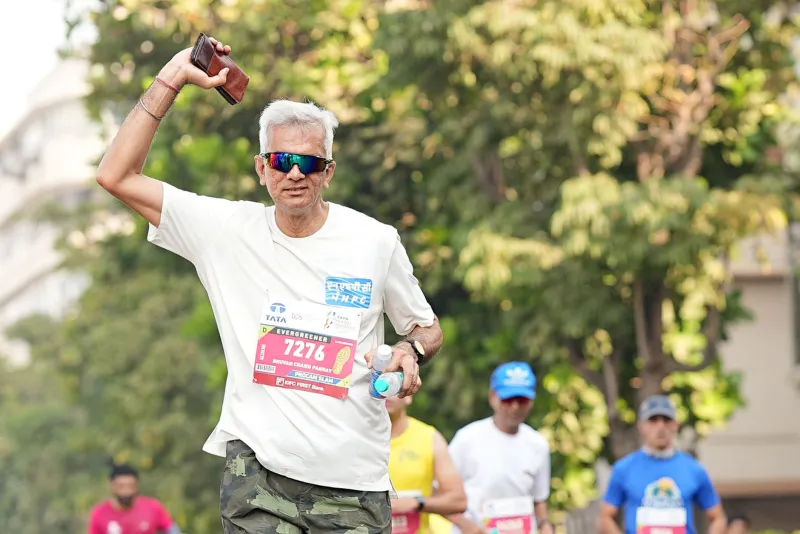
Carol Hennessey was 59 years old when her cardiologist told her she'd had a minor cardiac event. Not a full heart attack — something her doctor called a "warning shot." She drove home from that appointment in silence, sat in her driveway for twenty minutes, and then went inside and signed up for a 5K.
"I don't know exactly why that was my reaction," she says. "I think something just clicked. I'd been told my whole life that I wasn't an athletic person. And sitting in that car, I thought — if not now, when?"
Three years later, Carol completed her first sprint triathlon. At 63, she placed in her age group at a regional masters event.
Her story is more common than you might think.
The Paradox of the Wake-Up Call
It seems counterintuitive. A health scare — a cardiac episode, a diabetes diagnosis, a mobility crisis — is supposed to be a signal to slow down, not speed up. And for many people, that's exactly how it registers. But for a growing number of older adults, the experience of confronting physical vulnerability doesn't produce fear-based retreat. It produces something closer to defiance.
Dr. Sandra Oyelaran, a sports medicine physician who works with masters athletes in Chicago, has seen this pattern repeatedly. "There's a psychological mechanism that activates in some people after a health event where the body becomes a project rather than a problem," she explains. "They stop seeing themselves as someone managing an illness and start seeing themselves as someone building something. That's a fundamentally different relationship with your own body, and it's incredibly powerful."
The shift from health management to performance optimization, she notes, changes everything — including the types of activities people pursue, the consistency with which they train, and the goals they set for themselves.
From Diagnosis to Division
Marco Delgado was 62 when a routine checkup revealed early-stage type 2 diabetes. His doctor recommended lifestyle changes — more movement, better diet. Marco heard something slightly different.
"He said 'exercise more,' and I took that as 'become an athlete,'" Marco says, grinning. "I don't know if that's what he meant, but it's what I needed."
Marco started with daily walks, moved to cycling, and eventually found masters swimming through a friend at his gym. Within eighteen months, he was competing at the local level. His diabetes is now well-managed, but more than that, Marco describes himself as the fittest he's been since his 30s.
"My doctor shows my bloodwork to other patients as an example. I think that's funny. I'm just a guy who wanted to prove something to himself."
For others, the catalyst is orthopedic rather than cardiovascular. Patricia Sung, 66, spent most of her 50s managing chronic knee pain that her doctors attributed to early arthritis. She'd been told — repeatedly — to avoid high-impact activities. What nobody mentioned was that targeted strength training and low-impact competitive sports might actually reduce her symptoms.
"I found a physical therapist who specialized in masters athletes, and she completely changed my understanding of what my body could do," Patricia says. "She didn't tell me to protect my knees. She told me to build them."
Patricia now competes in masters rowing and credits the sport with giving her more pain-free mobility than she had a decade ago.
The Psychology of Reinvention
What makes health-scare athletes different from people who simply "start exercising after a scare"? According to sports psychologist Dr. James Whitmore, who has worked with older competitive athletes for over fifteen years, it comes down to identity.
"Most people who start exercising after a health event are still thinking of themselves as sick people trying to get better," he says. "The ones who end up competing have made a different identity shift. They've decided they're athletes. That's not a small thing — that identity shapes every decision they make about training, recovery, nutrition, and goals."
The competitive structure of organized sports plays a role here too. Having an actual event on the calendar — a race, a tournament, a meet — creates accountability that general fitness goals simply don't provide. When you're training for a masters swim meet, you're not just "trying to be healthier." You're preparing for something. That distinction matters enormously for motivation and consistency.
What the Research Is Starting to Show
The anecdotal evidence has long been compelling, but research is beginning to catch up. Studies on masters athletes consistently show that competitive older adults have better cardiovascular markers, lower rates of cognitive decline, stronger bone density, and improved mental health outcomes compared to age-matched non-athletes — including those who exercise regularly but don't compete.
The competition itself, researchers suggest, may be part of the medicine. The goal-setting, the structured training, the social connection, the sense of purpose — these are powerful contributors to overall health that a gym membership alone doesn't provide.
Dr. Oyelaran is careful to note that not every health event is a green light to train hard. "The starting point has to be a conversation with your physician and ideally a sports medicine specialist who understands what masters competition actually demands," she says. "But for many people with cardiac history, diabetes, joint issues, or other common conditions, structured athletic training — done properly — is not just safe. It's therapeutic."
Starting From Fear, Arriving at Strength
Carol Hennessey crosses every finish line thinking about that driveway. The twenty minutes of silence. The choice she made.
"People always want to know what my training secret is," she says. "I tell them: I'm running from something. But also toward something. Both at the same time."
If you've had a health scare and you're wondering whether competitive sport is something you could ever pursue — the answer, for more people than you'd expect, is yes. The doctor's office doesn't have to be the last stop. For a lot of people, it turns out to be the first one.
Compete boldly. Age proudly. Even when — especially when — the journey starts somewhere scary.