Shattering the Clock: The Older Athletes Rewriting Record Books Nobody Thought Would Change
For years, certain records in masters athletics felt permanent. Not because they were unbeatable in theory, but because — practically speaking — nobody was showing up to challenge them. The athletes who set those benchmarks back in the '90s and early 2000s were outliers. Exceptional people doing exceptional things in an era when serious competitive sport after 60 was still considered, well, a little unusual.
That era is over.
Across the United States, senior competitors are dismantling age-group records in track and field, swimming, tennis, cycling, and more — records that in some cases had collected dust for 20 or 30 years. And the people doing it aren't just talented. They're prepared, coached, and competing with an intentionality that mirrors what you'd find at any elite level of sport.
The Numbers Don't Lie
USA Track & Field's masters division has logged a surge in record-breaking performances over the past decade, particularly in the 65-and-over and 70-and-over age brackets. Similar trends have shown up in US Masters Swimming, where national age-group records in events like the 200-meter backstroke and 400-meter freestyle have been broken multiple times in the same calendar year — something that would have seemed almost impossible two decades ago.
What's driving it? A few things, and they're all feeding each other.
First, the sheer number of older Americans competing seriously has grown dramatically. The baby boomer generation — famously active and fiercely competitive — didn't stop when their careers did. Many of them kept training. Some picked sports back up after a long break. Others discovered new ones entirely. When you widen the pool of serious competitors in any age group, records fall. That's just math.
But it's not just a numbers game.
Better Science, Better Athletes
The training methodology available to masters athletes today is genuinely different from what existed a generation ago. Periodization principles once reserved for Olympic programs are now accessible to any serious recreational competitor willing to do the homework. Heart rate variability tracking, VO2 max testing, and sport-specific strength programming have trickled down from elite sports into the masters community — and athletes are using them.
Dr. Hirofumi Tanaka, a researcher at the University of Texas at Austin who has spent years studying masters athletes, has noted that older competitors who train systematically — not just frequently, but smartly — show cardiovascular and muscular adaptations that challenge long-held assumptions about aging physiology. The body at 68 can still respond to progressive overload. It just needs the right stimulus and the right recovery window.
That recovery piece is where the real evolution has happened. Senior athletes who are breaking records today aren't training harder than their predecessors. In many cases, they're training less volume but with far more precision — and they're recovering like it's a second job. Sleep protocols, anti-inflammatory nutrition, mobility work, and periodized rest have become as central to their programs as the workouts themselves.
Meet the Record Breakers
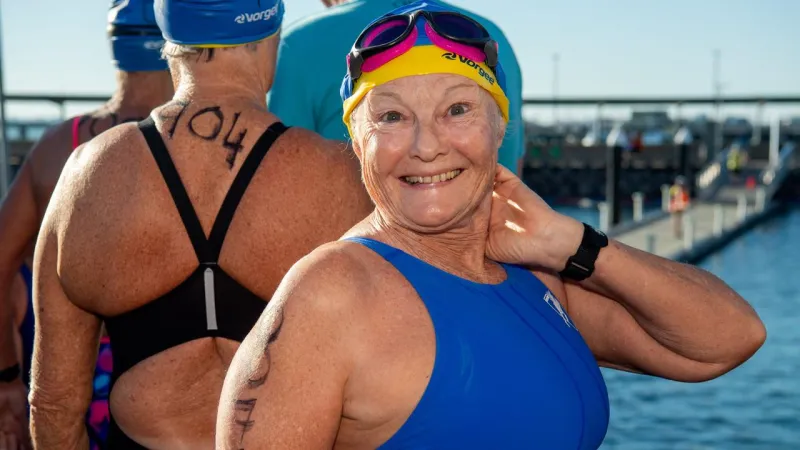
Take Carol Huynh — not the Olympic wrestler, but a 71-year-old masters swimmer from Arizona who shaved nearly four seconds off a national age-group record in the 100-meter breaststroke last spring. She'd been swimming competitively since her 40s, but it wasn't until she started working with a coach who specialized in masters athletes that her times began dropping in ways she hadn't experienced in years.
"I used to think I was just maintaining," she said. "Like, okay, I'm 71, I'm not getting faster. But my coach kept telling me I had more in the tank. Turns out she was right."
Or consider Robert Dawson, a 66-year-old masters runner from Colorado who broke a 28-year-old 1500-meter record in his age division at a regional meet last fall. He'd run competitively in college, drifted away for 25 years while raising a family and building a business, then came back to the sport at 58. Eight years later, he's faster than anyone in his age group has ever officially been.
"People keep saying 'at your age' like it's a warning," he laughed. "I just tune that out now."
What's Changed in the Culture
Beyond the science and the numbers, something cultural has shifted too. Senior competition has gained legitimacy. Events like the National Senior Games — which draws thousands of competitors across dozens of sports — have given older athletes a genuine competitive structure to aim for. Platforms built around masters athletics have made it easier to find training partners, coaches who specialize in older athletes, and communities where serious competition after 60 is the norm rather than the exception.
That normalization matters more than people realize. When a 67-year-old sees another 67-year-old breaking a national record, the ceiling lifts — not just psychologically, but practically. It creates a competitive environment where more athletes push harder, which produces more record-breaking performances, which raises the bar again. It's a self-reinforcing cycle, and it's accelerating.
What It Means for the Rest of Us
You don't have to be chasing a national record for any of this to be relevant to your athletic life. The same principles that are helping record breakers in their late 60s and early 70s perform at historic levels apply to anyone competing seriously at any level of masters sport.
Train with intention. Recover like it matters. Find a coach who actually understands how older bodies adapt. Stop treating your age as a ceiling and start treating it as a context.
The record breakers aren't anomalies. They're early adopters — athletes who figured out a few years ago what the broader masters community is only now beginning to understand: that aging doesn't end athletic potential. It just changes the approach required to unlock it.
The clock is still ticking. Some people are racing it. Others are leaving it in the dust.
Which one are you?