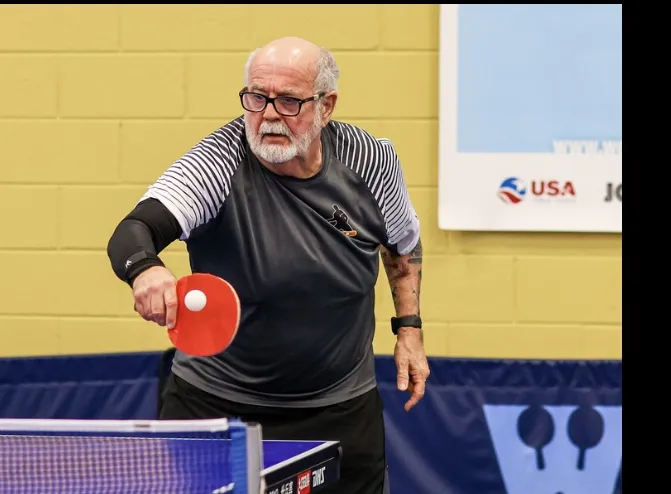
Gray Hair, No Mercy: How Senior Athletes Are Quietly Beating Everyone Else in Open-Division Play
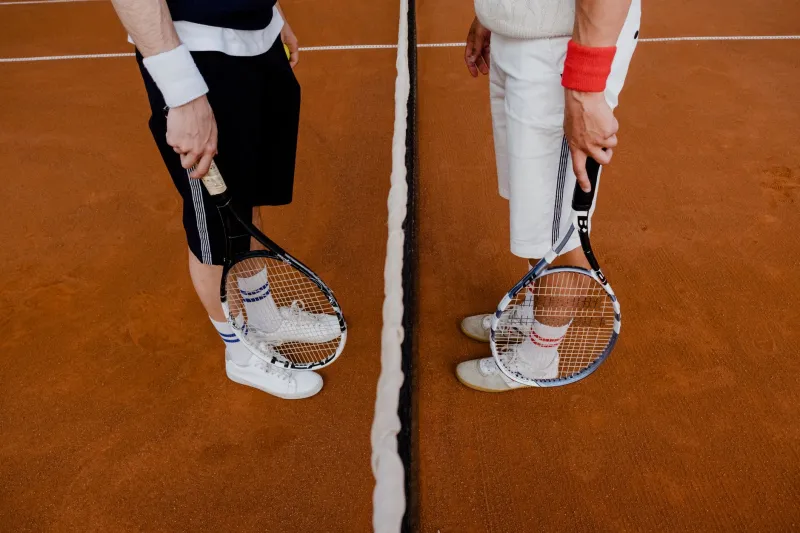
There's a moment that keeps repeating itself at open-division tennis tournaments, road races, and masters swimming meets across the United States. A competitor steps up — maybe 58, maybe 64 — and the younger athletes in the bracket don't think much of it. Then the match ends. And the older athlete walks off with the win.
It's not a fluke. It's a trend. And the sports world is just starting to catch up.
The Numbers That Are Turning Heads
In recent years, national governing bodies for sports like tennis, triathlon, and masters swimming have noticed something their age-bracket systems weren't designed to account for: senior athletes are regularly outperforming open-division competitors who are decades younger.
At the USTA's open-level tournaments, coaches and tournament directors have started informally tracking what some are calling "age-up wins" — instances where competitors 50 and older defeat players in the open or 35-and-under brackets. The results are striking. It's not a rare exception anymore. In certain disciplines, particularly those that reward consistency, strategy, and mental endurance over raw explosiveness, the senior contingent is winning at rates that have organizers seriously reconsidering how they structure competition tiers.
"We built our divisions assuming performance peaked young and declined linearly," said one regional tennis coordinator who asked not to be named. "What we're seeing now doesn't fit that model."
What Experience Actually Buys You
Ask any senior competitor why they think they're beating younger players, and you'll hear a version of the same answer: they've stopped making the mistakes that cost points.
Decades of competition teach a kind of pattern recognition that no amount of raw talent can shortcut. A 62-year-old tennis player who's spent 30 years reading opponents' body language doesn't need to be faster — they already know where the ball is going. A 59-year-old masters swimmer who's raced hundreds of open-water events has a pacing intelligence that younger competitors spend years trying to develop.
Sports science backs this up. Research on expert performance in racket sports shows that experienced players use anticipatory cues — subtle visual information from an opponent's posture, grip, and weight shift — to compensate for slower reaction times. The brain, in other words, gets smarter about movement even as the body changes.
That's a competitive advantage that doesn't show up in a speed test or a vertical jump measurement. But it absolutely shows up on the scoreboard.
The Psychology of Competing Across Generations
There's also something happening mentally that's harder to quantify but equally real.
Senior athletes competing in open divisions often describe a freedom that comes from having nothing to prove — and everything to gain. Younger competitors sometimes carry the weight of expectation, fear of embarrassment, or anxiety about their athletic identity. A 61-year-old who decided to enter a mixed-age tournament "just to see" doesn't carry that baggage.
That psychological lightness can translate directly into better performance. Coaches who work with senior competitors in open divisions have observed that their athletes tend to play their own game more consistently, get rattled less by momentum shifts, and recover from dropped points or bad sets with more composure than their younger counterparts.
"The 25-year-old loses a game and starts pressing," one tennis coach in Austin, Texas explained. "My 60-year-old client loses a game and thinks, 'Okay, what do I need to adjust?' That's a massive difference in a tight match."
What Organizers Are Learning — and Changing
The rise of competitive seniors in open-division play is forcing a real conversation about how sports leagues categorize and protect competitive fairness.
Some organizations have responded by creating "open plus" brackets that blend age groups intentionally, celebrating the cross-generational competition rather than treating it as an anomaly. Others are revisiting their seeding algorithms, which historically weighted age as a performance predictor in ways that may no longer be accurate.
The USTA's senior competitive pathway, for instance, has seen growing interest from players who want to compete both in age-specific divisions and in open draws — essentially doubling their competitive calendar. Tournament directors in states like Florida, Arizona, and California, where senior athletic communities are dense and well-organized, have started designing events that accommodate this dual-participation model.
There's also a sponsorship angle emerging. Brands that have historically targeted younger athletic demographics are starting to notice that the 55-and-older competitor is not just active — they're winning. That's a different marketing conversation than the one that's dominated sports for the last 40 years.
What It Means for the Rest of Us
If you're a senior athlete who's been sticking to age-bracket competition because open divisions felt like somebody else's territory, this might be the nudge you needed.
The athletes crossing generational lines in competition aren't unicorns. They're people who trained consistently, leaned into what experience gave them, and decided that age was a data point — not a ceiling.
The younger bracket might look intimidating on paper. But paper doesn't account for 30 years of knowing exactly what you're doing out there.
At Senior Cup MTY, we've always believed that competing boldly means refusing to let assumptions define your limits. The open division? That's just another place to prove it.