90 Days to Tournament-Ready: The Senior Athlete's Blueprint for Going from Zero to Competing
Let's be honest about where some of us are starting from. Maybe it's been a year since you did anything athletic. Maybe it's been five. Life gets busy, knees get loud, and somewhere along the way the idea of competing started to feel like a different person's dream.
But here's what a lot of senior athletes are discovering: 90 days is enough time to change the whole picture. Not to become an Olympian. But to get genuinely, measurably, tournament-ready — and to feel it in your body every step of the way.
Why 90 Days Works (And Why It's Not Just a Gimmick)
The 90-day framework isn't arbitrary. It maps onto the way the human body — at any age — responds to structured training stimulus. Physiologists call it periodization: breaking a training block into phases that build on each other, allowing the body to adapt without burning out or breaking down.
For senior athletes specifically, periodized programming carries extra weight. Recovery windows are longer. Tissue adaptation takes more time. And the consequences of overtraining — injury, inflammation, discouragement — are more disruptive than they are for a 25-year-old who can bounce back in 48 hours.
A well-designed 90-day senior program doesn't ignore these realities. It's built around them.
"The mistake a lot of older adults make when they decide to get back into fitness is they try to train like they did at 35," says Dr. Marcus Webb, an exercise physiologist who works with masters athletes in the Denver area. "The smart approach is to treat your current body as the starting point — not a lesser version of your past self — and build from there."
The Three Phases: What Each Month Is Actually Doing
Month One: Foundation
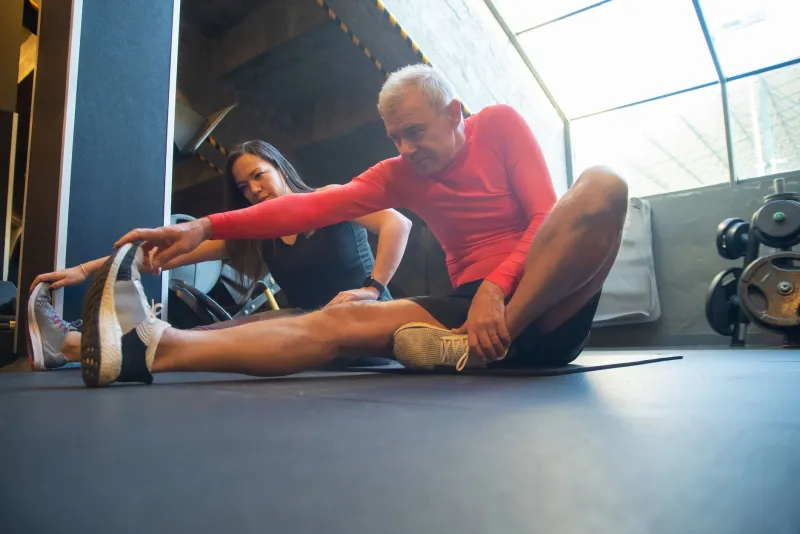
The first 30 days are about one thing: building the physical infrastructure that everything else depends on. That means mobility work, basic strength training with light-to-moderate loads, and aerobic conditioning at conversational intensity.
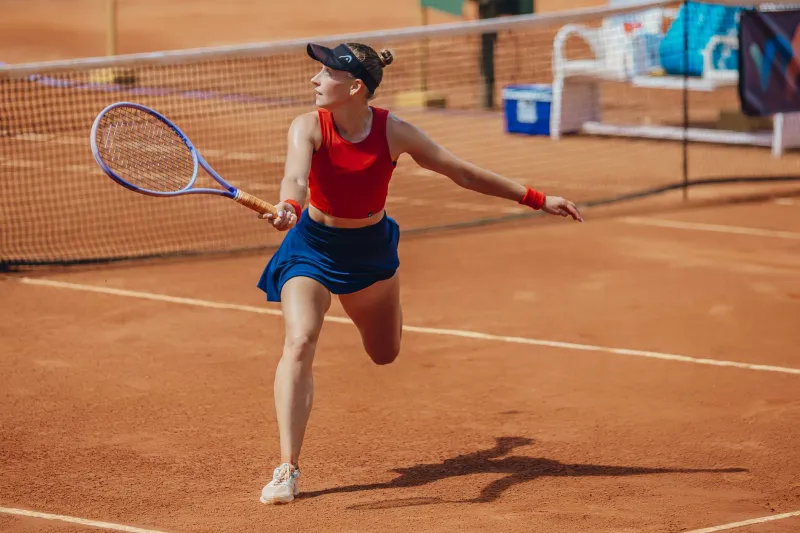
For a senior athlete preparing for tennis, this might look like three days a week of bodyweight and resistance band work focused on hip stability, shoulder health, and rotational strength — combined with 20-to-30-minute steady-state cardio sessions. For a masters swimmer, it's technique-focused pool work and dryland mobility.
The goal isn't to feel crushed by the end of the week. The goal is to feel consistently better than you did the week before.
Milestone check at day 30: Can you move through your sport's basic patterns without pain? Is your resting heart rate trending down? Are you sleeping better? If yes, you're on track.
Month Two: Build
This is where the training gets specific and the intensity starts to climb — deliberately, incrementally. Strength benchmarks get more demanding. Sport-specific drills replace some of the general conditioning work. You start spending time doing things that actually look like competing.
For most senior athletes, this is also the phase where the mental shift happens. The body starts to feel capable in ways it hasn't in a while. Movements that felt awkward in week two start to feel natural. Confidence follows.
Milestone check at day 60: Can you sustain effort through a simulated match or race-pace session without your form collapsing? Are you recovering well between training days? That's the green light for the final phase.
Month Three: Sharpen
The last 30 days are about competition simulation and fine-tuning. Volume actually drops slightly while intensity increases. Practice matches, timed trials, and scenario-based drills replace some of the straight conditioning work.
This is also when smart senior programs build in deliberate recovery windows — sometimes called "deload weeks" — to make sure the athlete arrives at their first tournament fresh, not depleted.
Real Stories, Real Results
Carol Hutchins, 67, from Scottsdale, Arizona, hadn't played competitive tennis in over a decade when she decided to enter a local USTA senior tournament last spring. She gave herself 90 days.
"I started with a trainer who works specifically with older athletes, and we built everything from scratch," she says. "I was embarrassed at first by how basic the first month was. But by month two I was hitting better than I did in my 50s because my movement was so much more efficient."
She finished third in her first tournament back. She's already registered for two more.
Robert Chambers, 61, from Nashville, Tennessee, used a similar structure to prepare for his first masters swimming meet after 20 years away from competitive swimming. "The 90-day structure kept me from doing too much too fast," he says. "Every week I had something specific to hit. That kept me honest."
The Non-Negotiables for Senior Athletes in Any 90-Day Block
Beyond the phases themselves, certain elements are essential for senior athletes specifically:
- Two rest days per week minimum. Not optional. Not a sign of weakness. Physiologically necessary.
- Protein intake at or above 1 gram per pound of bodyweight. Muscle protein synthesis in older adults requires more dietary stimulus than it does in younger athletes.
- Sleep as training. If you're not getting seven to nine hours, you're leaving adaptation on the table.
- A movement screen before you start. Know where your mobility limitations and injury risks are before you build on top of them.
The Real Point
Ninety days won't make you a different person. But it will make you a competing one. And at Senior Cup MTY, that's the whole point — getting you from wherever you are right now to the place where you're lining up at the start and knowing you belong there.
The couch will still be there when the tournament's over. But we're guessing you won't want to go back to it.