The Advantage Nobody Talks About: How Decades of Hard Living Make Senior Athletes Harder to Beat
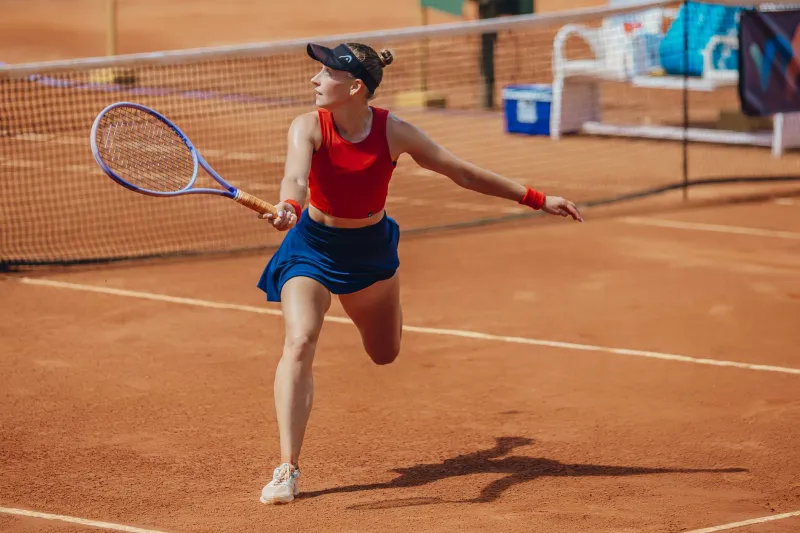
There's a moment in almost every high-stakes competition when the pressure becomes almost physical. A match point. A final lap. The last few seconds of a close game. Younger athletes often describe this moment as a kind of tunnel — adrenaline spiking, thoughts racing, the body fighting itself.
Senior athletes describe something different. Many of them describe feeling almost calm.
That's not a coincidence. And it's not complacency. It's the product of something no training program can fully replicate: a life fully lived, with all the setbacks, recoveries, and hard-won perspective that come with it.
What Sports Psychologists Are Actually Seeing
Dr. Angela Ferris, a sports psychologist based in Chicago who works extensively with masters and senior athletes, has spent the last decade studying what she calls "experiential resilience" — the psychological durability that accumulates through decades of navigating real-world adversity.
"When I work with a 22-year-old athlete, a lot of the mental skills training is about building frameworks for handling pressure that they haven't encountered yet," she explains. "When I work with a 60-year-old athlete, those frameworks already exist. My job is mostly about helping them recognize and access what they've already built."
The research supports this. Studies on emotional regulation in older adults consistently show that people in their 50s and 60s demonstrate better control over negative emotional responses than younger adults — not because they feel less, but because they've developed more sophisticated strategies for managing what they feel. In competitive sports, that translates directly into performance under pressure.
The Curriculum of Hard Times
Ask senior competitors what's happened in their lives and you'll get a catalog that would crush a younger person just hearing it: job losses, divorces, serious illness, the death of parents and sometimes children, financial crises, career reinventions. Not every senior athlete has faced all of these. But most have faced enough.
"I lost my business in 2008," says Tom Delgado, 63, a competitive tennis player from Miami who now competes in USTA senior divisions and occasionally in open draws. "I had employees, a mortgage, everything on the line. I had to rebuild from nothing. After that? A tight match doesn't scare me. I've been in situations where the stakes were actually high."
This kind of perspective — genuine, earned, not performed — creates a baseline of psychological security that younger competitors often lack. The tennis match matters. But it doesn't feel like survival. And that difference in felt-stakes is enormous when the pressure is on.
Margaret Okonkwo, 58, from Atlanta, who took up competitive swimming after her youngest child left for college, describes it similarly. "I spent 25 years raising three kids while working full-time. I know what real stress feels like. Standing on a starting block is not it. It's exciting. It's fun. I refuse to let my brain treat it like a crisis."
The Mechanics of Mental Toughness in Competition
So how does life experience actually translate into competitive performance? Sports psychologists point to several specific mechanisms:
Reframing under pressure. Experienced athletes — particularly those who've navigated significant life challenges — are faster at recontextualizing a bad moment. A broken serve, a missed shot, a poor split time doesn't spiral into a narrative about failure. It gets filed as data, and the next point starts fresh.
Reduced ego threat. A significant portion of competitive anxiety in younger athletes stems from what psychologists call ego involvement — the fear that losing means something fundamental about who they are. Senior athletes, particularly those who've built identities through careers, families, and diverse life experiences, are less likely to have their entire self-concept riding on a single match result.
Attentional control. Decades of high-stakes professional and personal situations train the brain to focus on what's controllable and filter out what isn't. This maps almost perfectly onto the mental skills that elite coaches spend years trying to teach younger athletes.
Relationship with failure. Senior athletes have simply failed more — at more things, with higher real-world consequences — and survived. The accumulated evidence that failure is survivable and often instructive creates a relationship with risk that is fundamentally different from someone who hasn't yet built that history.
The Dark Side: When Experience Becomes Baggage
It's worth being honest here — life experience doesn't automatically produce mental strength. Unprocessed trauma, chronic stress, and accumulated cynicism can work against a competitor just as easily as they can work for one.
Dr. Ferris is direct about this: "The senior athletes who struggle mentally in competition are often the ones carrying resentment or anxiety from their life experiences rather than having worked through them. The advantage comes from integration — from having processed those experiences into something useful."
This is one reason why mental skills work — therapy, mindfulness practice, journaling, even just honest conversation with a coach — matters for senior competitors just as much as physical training. The raw material of experience is there. The work is in refining it.
Competing with Perspective as Your Weapon
At Senior Cup MTY, we talk a lot about competing boldly and aging proudly. But there's a third element that deserves equal billing: competing wisely.
The senior athletes who are making their younger competitors nervous aren't just physically capable. They're mentally sophisticated in ways that take decades to develop. They know when to push and when to conserve. They know how to lose a point without losing a match. They know that the scoreboard is one measure of a good competition — and not always the most important one.
That wisdom doesn't replace physical preparation. You still have to put in the work, log the miles, and show up ready. But when two athletes are evenly matched on paper, the one who's been through more real life often wins.
And that, quietly, is one of the best arguments for competing later in life that anybody's ever made.