The Nemesis Dividend: Why the Person Who Always Beats You Is the Best Coach You've Got
Photo: Unknown, CC BY 4.0, via Wikimedia Commons
There's a guy in Tucson — call him Dave — who has been losing to the same tennis player for nine years. Same opponent, roughly the same score line, roughly the same round of the bracket. Dave turns 72 in March, and he will tell anyone within earshot that this man is the reason he still drags himself to the courts at 5:40 in the morning.
That's the part of senior sports that never makes the brochure. Not the medals. Not the travel. Not the commemorative T-shirt. It's the grudge.
The Guy Across the Net
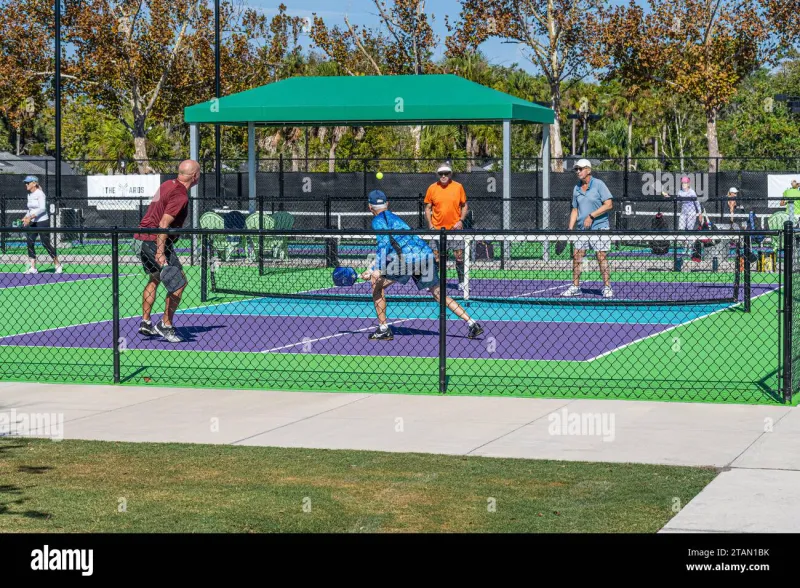
Every serious senior circuit accumulates them. In tennis, it's the 4.0-level nemesis you've drawn in the quarters four years running. In pickleball, it's the duo that keeps materializing on the other side of the net in the semifinals, year after year, like they've got a standing reservation. In bowling, it's the guy who owns your lane and, mysteriously, a corner of your head.
Tournament directors see it constantly, and most of them will tell you the same thing: the athletes who stick around the longest are rarely the most gifted ones. They're the ones with unfinished business. A rival converts a vague intention — I should stay in shape — into something far more powerful: I am not losing to that man again in April.
Rivalry as a Training Plan
Here's the practical case for keeping a nemesis on the books. Motivation in senior sports tends to erode quietly. Doctors' appointments multiply, grandchildren arrive, a knee gets cranky in November, and by February the gym membership is a monthly donation. Abstract goals don't survive that. Concrete ones do.
A named opponent is about as concrete as it gets. It gives you a deadline, a scouting report, and a reason to do the boring stuff — the mobility work, the second set of sprints, the lesson with the pro to fix a backhand that's been leaking points since the Clinton administration.
There's a reason so many senior competitors describe their rivalries in coaching language. They talk about what they learned from watching a guy's serve, how they adjusted their positioning, how they finally figured out that the nemesis hates a slow ball to the backhand. That's not ego. That's film study, conducted over a decade, for free.
The Rules of a Good Grudge
Not all rivalries are healthy. The ones that keep athletes sharp share a few features, and the ones that curdle share the opposite.
A good rivalry is public and friendly. The two of you shake hands, maybe grab a coffee after, and both know exactly where you stand. A bad one lives in your head at 2 a.m.
A good rivalry is about the game, not the person. You want to beat his serve, not diminish him. The moment it becomes about proving something about who deserves respect, the whole thing turns toxic — and in senior sports especially, that's a spectacular waste of a friendship.
A good rivalry is renewable. The best ones survive a change of divisions, a move to a different age bracket, a bad year. If your rivalry depends on beating someone who's currently injured, it isn't a rivalry. It's a scheduling coincidence.
What It Does to the Brain
There's a growing body of work on competitive engagement in older adults, and the themes are consistent: people who compete — not just exercise — tend to stay more cognitively and socially engaged than those who work out solo. A rivalry bundles several things at once. It's a social relationship, a goal structure, and a problem to solve. You have to remember patterns, anticipate, adjust, and manage your own nerves. All of that is exercise, just not the kind you can log on a watch.
And there's an emotional component that's easy to undervalue. Being somebody's nemesis is a role. It comes with expectations and a place in a community. That's a surprisingly sturdy thing to have at 68, when a lot of the other roles you used to carry have quietly retired themselves.
When the Rivalry Ends
This is the hard part, and it's worth saying plainly. Rivalries have a shelf life. Bodies break down. People move to be closer to family. Someone gets a diagnosis, and the semifinal that was a fixture for eleven years just doesn't happen again.
Veterans of the circuit handle this in a couple of ways. Some pass the role along — they start mentoring the next person up, become the nemesis for somebody fifteen years younger. Others deliberately widen their circle, entering more events and building a bench of opponents so no single absence guts their calendar.
The athletes who struggle are the ones who built their entire competitive identity around one person. When that ends, they stop entering. You see it happen. It's one of the quietest ways senior athletes leave the sport.
Go Find Your Nemesis
If you're new to competing and don't have one yet, here's the short version: enter the same two or three tournaments next season. Play the same divisions. Learn some names. Keep a note on your phone about who beat you and how. Then go back and try again.
Within a couple of years, you'll have one. And when you do — when you see that name populate next to yours in the draw, and your stomach drops a little and your week suddenly has structure again — you'll understand why Dave is still getting up at 5:40.
He's not chasing a trophy. He's chasing a rematch.